Service area
BBQ Catering in DaytonLyon County
The part that matters to a booking, though, is administrative rather than historical. Those twelve miles cross into Lyon County. A park reservation, a permit or a public-facility hire here goes through a different county government than the same request would in the capital, and it runs to its own lead times.
- Distance from our base
- about 12 miles northeastStraight-line from 5110 S Edmonds Dr, Carson City — not a road distance.
- County
- Lyon County, Nevada
- Good to know
- An unincorporated town in Lyon County, and one of the oldest non-native settlements in Nevada — a different county authority from Carson City despite the short distance.
An old town with new valley around it
Two calendars run side by side. The historic core keeps up a town's worth of community events — club and society gatherings, fundraisers, seasonal celebrations, the sort of thing organized by volunteers who have run it before and know what they need. Out in the newer valley housing the events are domestic and multiplying: graduations, birthdays, retirements, receptions held at home.
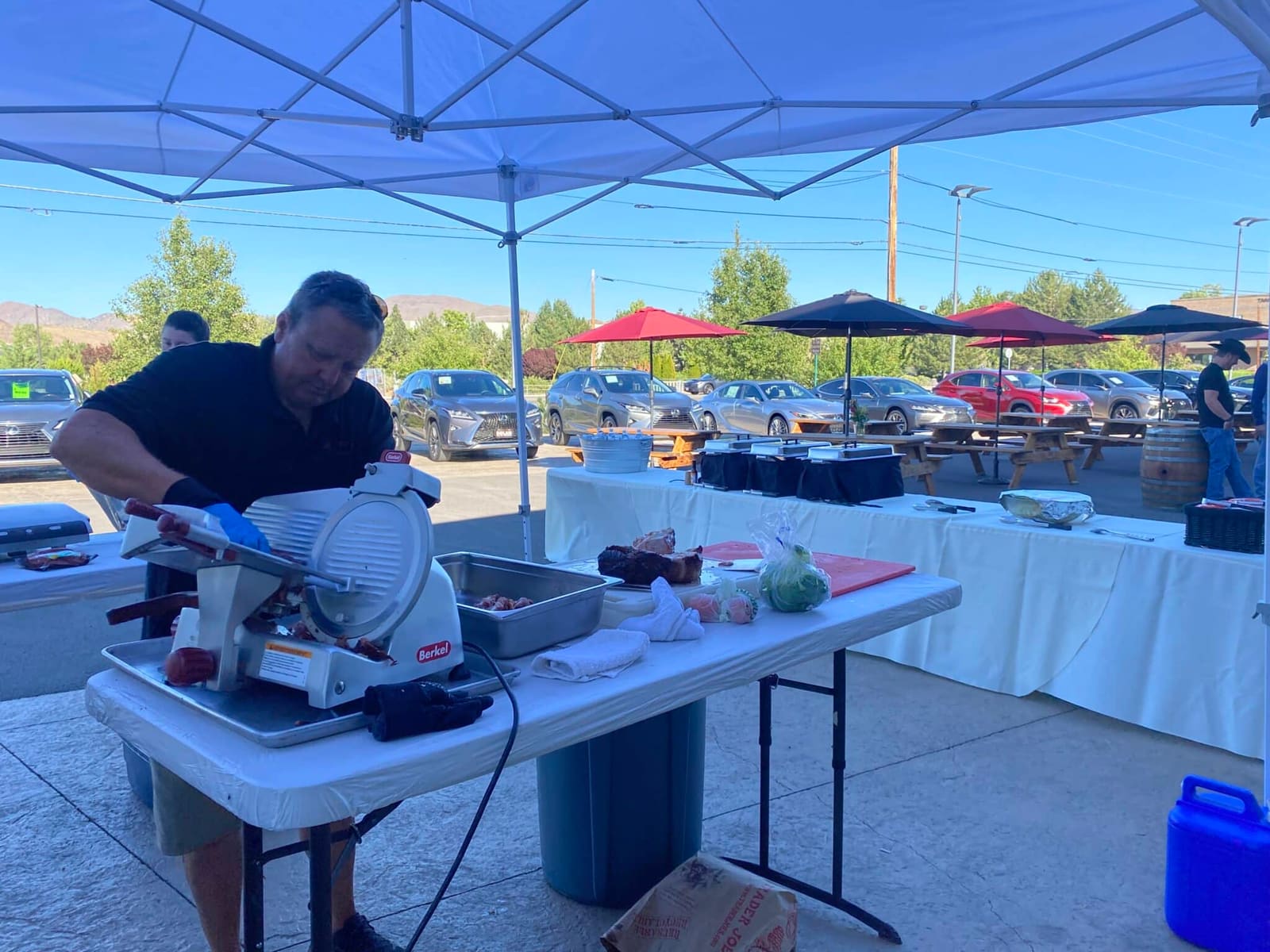
What both have in common is ground with no commercial kitchen attached to it — a park shelter, a clubhouse, a shop, a back yard, a stretch of river bank. For this outfit that is the normal case rather than an obstacle, because everything needed to cook the food and to serve it arrives on the trailer with the crew.
When the event moves indoorsthe cooking does not
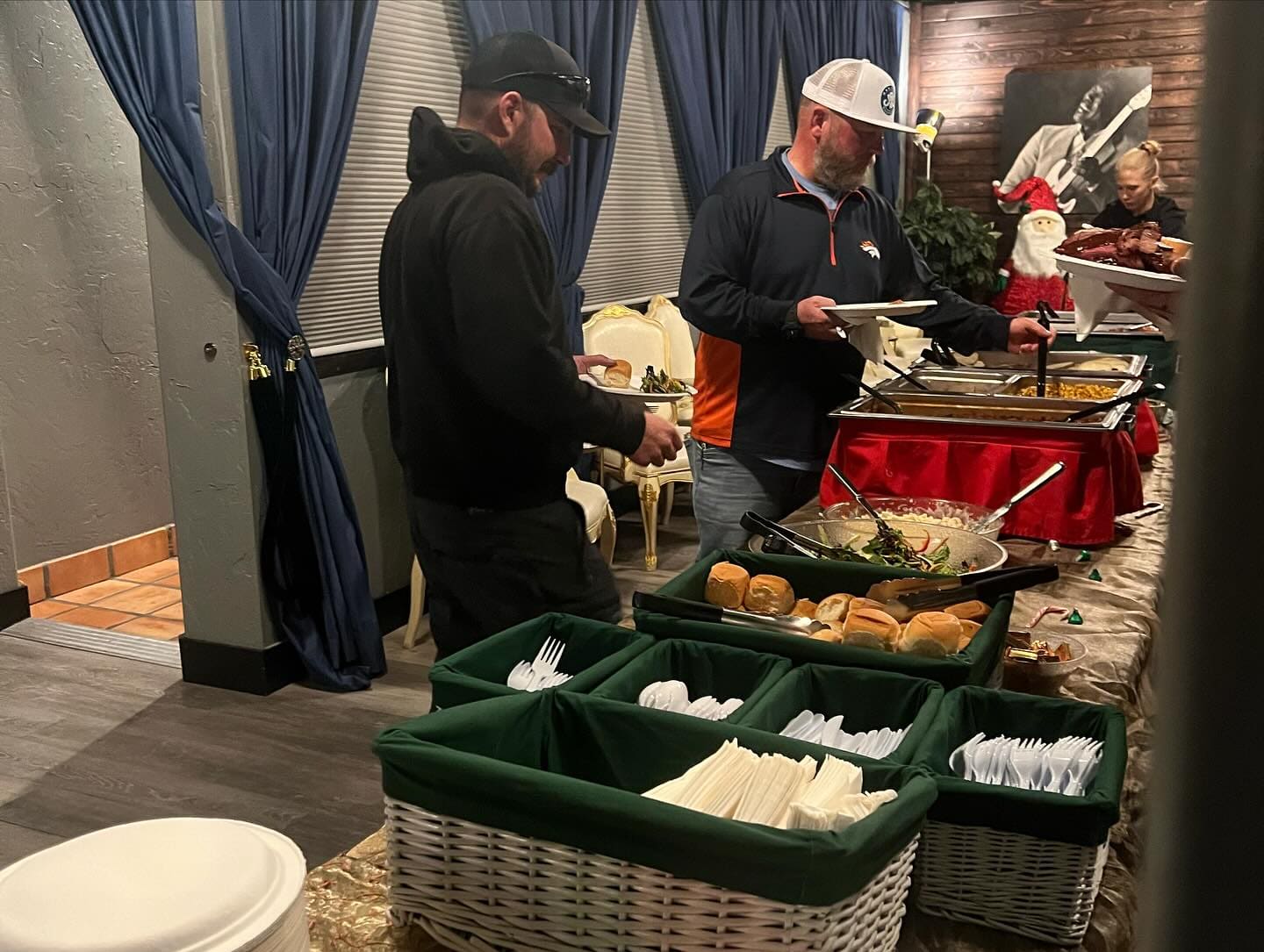
A good share of the year's events here happen inside — a hall, a clubhouse, a shop with the vehicles moved out for the evening — and that changes less than people expect. The rotisserie works outside the building whatever the weather is doing; what comes in through the door is the serving line, the warmers and the crew running them.
What a room has to offer is a door wide enough for tables, somewhere to set a line that is not across a fire exit, and space for people to move along it without queueing into the room next door. A kitchen has never been on that list, indoors or out.
Worth checking before you commit to the ground
Three questions that decide more about an event on this side of the river than anything on the menu does.
- Whose ground it is
- A county department, a town board and a private owner all say yes in different ways and on different timelines. Find out which one you are asking before the date goes on the invitations.
- Getting the rig in
- The cooker is twenty feet of trailer behind a vehicle. On a shelter or river-bank site the awkward part is rarely the space itself but the way in to it: the surface, the width, and whether it can be left there without boxing everybody else in.
- Fire restrictions in season
- Open ground late in the summer can be under restrictions that affect what may burn and where it may stand. Ask the landowner or the county what is in force for your date, and tell us what they say.
Downstream, and across a county line
The run northeast is short, low and level. The town sits a few hundred feet below us on the river, with none of the summit climbing that a booking on the far side of the valley involves, and it is one of the few directions out of here with no grade worth planning around. For a crew and a loaded trailer that makes for a straightforward morning.
Jurisdiction is the thing to settle early instead. The county and the town's own boards look after the parks and public facilities here, and a caterer setting up at one of them generally needs the reservation and whatever permit goes with it to be in hand first. Ask the facility what it wants from a vendor as soon as you have a date — that is the step with the longest lead time in the whole process.
Either tier works here and the site decides which
At this distance both published tiers are honest options, and what settles it is the site rather than the headcount. If the food is going into a room with tables and people serving themselves across a set hour, a drop-off at the 20-person minimum does the job — bearing in mind that our terms add a travel fee to drop-offs wherever they are going.
If it is outdoors, or if the eating will spread across an afternoon, the full cater at 40 and up is the one that holds up. The cooker is on site, the meat finishes there, and the line is staffed for the two-hour serve window instead of being left to cool in trays while people drift back for seconds.
What we usually suggest here
Either tier works
20-person minimum for drop-off and pick-up · 40-person minimum for a full cater. Every event is quoted individually.
Travel fees are added to caters outside our immediate area.
Also nearby
- Carson CityCarson City, NV · about 3 miles north of our base
- Silver SpringsLyon County, NV · about 34 miles northeast of our base
Not sure any of these is the right page? Start with what a full cater involves or read the menu.
Send us a Dayton date
Give us the site, the date and roughly how many people. If the ground belongs to the county or to a public facility, say so — the paperwork on their side usually takes longer than anything on ours.